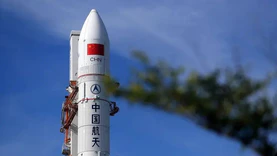
On September 11th, Tianbing Technology announced that the first flight of the Tianlong-3 Yao-1 carrier rocket had failed and returned to zero.
The zeroing verification work started in April and lasted nearly 5 months, with more than ten versions of the report iterated. In this cycle of spring and summer alternation, the main work of the project team revolves around data review, experimental reproduction, and scheme rectification, with most of the work falling outside the public eye.
What does a flight failure mean on a high-capacity rocket equipped with over twenty pioneering technologies? What unknown boundaries did the team touch during the zeroing process? Besides fault tracing, what engineering knowledge has been accumulated from this test flight? Can the Yao-2 rocket still wait for the launch window this year?
After passing the zeroing review, Zhang Jianhong, Deputy General Manager and Assistant Chief Designer of the Rocket R&D Department of Tianbing Technology, introduced the relevant situation.
▍189.5 seconds
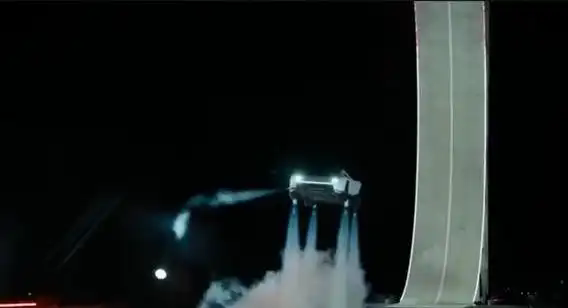
At 12:17 on April 3, 2026, the Tianlong-3 Yao-1 carrier rocket was ignited and launched from the Dongfeng Commercial Aerospace Innovation Experimental Zone.
110 seconds, Max-Q (maximum dynamic pressure) reaches the design value.
177.2 seconds, a sub level completes all flight sequence actions.
182.2 seconds, the first and second levels separated normally.
185.9 seconds, the secondary engine ignites normally.
Everything seems to be going according to plan.
But only 3.6 seconds later, the situation changed.
At 189.5 seconds, the second stage of the rocket flew at a lower altitude than expected, and then lost control of the flight, resulting in the termination of the mission.
Why did a rocket that has completed multiple key validation subjects fail to enter orbit during its maiden flight?
On the night of the launch, the zeroing team had already assembled.
▍5 months of zeroing
To explain clearly what happened in these 3 minutes, the team spent nearly 5 months completing the entire zeroing process. After several weeks of investigation and positioning, the reason for the failure has been identified.
According to the announcement from Tianbing Technology, the reason for the failure of the Tianlong 3 Yao-1 flight is located as follows: the liquid oxygen emitted during the flight was sucked into the bottom of the rocket, causing secondary combustion of the exhaust gas from the first stage engine turbine at the bottom, resulting in erosion and deformation at the connection structure of the bottom thermal skirt, causing high-temperature gas from the engine to enter the first stage tail compartment, causing a fire in the tail compartment and abnormal rocket flight.
Zhang Jianhong stated that the failure mode that occurred during this flight belongs to the system coupling condition during the flight. Ground tests are difficult to cover such edge states. The aerodynamic environment, jet field, and temperature field in real flight overlap with each other, exceeding the simulation capability of ground tests
He added two details: one is that the 9 Tianhuo 12 engines were working normally, and subsequent shutdowns were caused by secondary faults such as combustion and erosion of valves and cables in the cabin. Another detail is the difference in separation height. After the malfunction occurred, the engine shut down according to the scheduled procedure, and the rocket failed to reach the original separation altitude of 70 kilometers. In fact, at an altitude of 40 kilometers, the atmospheric density at this altitude is more than 200 times that of 70 kilometers, which directly leads to rapid rolling of the secondary attitude after separation.
A third-party analysis suggests that if the rocket can achieve a higher flight altitude before separation, or avoid first and second stage collisions, it is highly likely to complete subsequent flight missions. But there is no 'if' in space.
The most difficult step in the zeroing process is fault localization - it requires integrating multiple sources of data for cross validation, which takes about a month. The longest process is the production and experimental verification of the improvement plan. Aerospace engineering does not accept 'speculation of the cause', even if the deviation is extremely small, it must be reproduced and verified from scratch, "Zhang Jianhong said." Finding fault clues is only the first step. The core of aerospace zeroing is to accurately reproduce the mechanism, solidify the problem boundary, and ensure that rectification is thoroughly effective
He paused for a moment and said something off topic: "When I first started working, my master said that the more I worked in aerospace, the more timid I became. I didn't have a deep understanding of this matter at the time. After working for so many years, I finally understood
It is reported that in the future, Tianbing Technology will further strengthen the risk control of the entire arrow process. Continuously identify risks from design, testing, production and manufacturing to supply chain, continue to promote design quality improvement at the design end, strengthen quality penetration management at the supply chain end, and further implement quality requirements at all stages. The experience and lessons learned from this zeroing process will also be accumulated internally, forming executable and implementable mechanisms and processes, and truly implemented in the subsequent development of new models and product delivery.
And all of this is in front of the reality backboard of commercial rockets: technological iteration requires a trial and error window, market delivery expects stable output, and capital values predictable progress. The triple cycle is difficult to perfectly align, and the five month zeroing process of Tianbing Technology is an indispensable step for commercial rocket companies to enter the engineering application process.
▍The back of failure
During the 189.5 second flight, a batch of new technologies underwent testing under real operating conditions.
Zhang Jianhong stated that since its establishment, Tianlong III has been benchmarking against international first-class standards and has adopted multiple technological innovations. The intensive deployment of new technologies has significantly increased system level complexity and difficulty. During the completed flight of Yaoyi, over 80% of the innovative technologies carried have been effectively validated.
At the level of the arrow body, the problem of attitude control caused by a slenderness ratio of 19.0 has been effectively solved through techniques such as elastic adaptive stability control. This is a prerequisite for all subsequent verifications.
The performance of the power system is equally crucial. The remote data shows that the nine Tianhuo-12 engines operate normally and the system runs stably. The complex working conditions of multiple parallel engines have withstood the test in real flight.
The liquid nitrogen vaporization pressurization scheme uses liquid nitrogen to simultaneously pressurize both the liquid oxygen tank and the coal oil tank, achieving cost reduction, weight reduction, and system simplification while ensuring stable pressurization. This is the world's first flight engineering verification, and its reliability has been tested in actual combat. It can be extended to various low-temperature launch vehicles in the future.
The domestically pioneered gas injection accumulator has achieved suppression effects far beyond traditional solutions to address the difficulty of longitudinal coupled vibration in rockets. The remote flight retrospective data shows that the system works stably throughout the entire process, accumulating key experience for the development of future heavy and reusable rockets.
The above practical data provides a real basis for the iteration of model simulation models, environmental envelope, and tail protection design. This flight also fully recorded the entire chain process of edge condition propagation and ultimately causing system level anomalies under the parallel configuration of nine aircraft, providing engineering reference samples for the study of system level fault mechanisms and risk prevention of similar complex configuration rockets in China.
▍Standing on the threshold of go around
The release of the zeroing announcement also marks the end of the zeroing battle for Tianlong-3 and the official entry into a new stage of preparation for the Y-2 rocket.
Zhang Jianhong introduced that the entire process from fault location, mechanism analysis to improvement implementation has turned previously unknown risks into known and closed-loop engineering experience, which has been deposited into the design specifications, testing standards, and risk identification lists of subsequent models.
Currently, the Yao-2 rocket has completed its final assembly and testing, and is expected to make a go around in Q4 of 2026. The specific time will be determined based on the rocket launch window. The core goal of go around is to prioritize the verification of the correctness of the rectified rocket plan, collect as much flight condition data as possible, continuously accumulate real flight condition data, and provide support for the reliability improvement of subsequent models.
▍Twice Ability
A senior once said: Success does not equal maturity, maturity does not equal reliability, and reliability does not equal being foolproof. ”Zhang Jianhong's words perfectly explain why the success or failure of a first flight is not enough to define the ultimate outcome of a rocket.
The pace of domestic commercial aerospace iteration will continue to accelerate in 2026. The sea land recycling routes have successively broken through, and reusable rockets have rapidly entered the stage of engineering intensive verification from technological exploration. Along with the high-speed competition in the industry, model trial and error, review and iteration, and steady upgrading are also the necessary paths to maturity.
The speed of industry iteration is often determined by two abilities: the first is the exploration ability of rapid maiden flight, and the second is the correction ability of deep zeroing. In the short term, it is the difference in launch progress. In the long term, commercial aerospace competes for the stability, iteration efficiency, and potential for large-scale delivery of engineering systems.
There is no unconditional maturity in aerospace engineering. All boundary cognition comes from real flight tests; All system capabilities come from a complete review loop.
This trial and error and zeroing is a crucial stress test in the process of Tianlong III transitioning from a technical prototype to a commercial model, and also a recalibration of Tianbing Technology's development system, engineering culture, and risk management capabilities.
For Tianlong-3, the flight of Yaoyi has come to an end, and all conclusions, improvements, and cognitive upgrades will ultimately be handed over to the next ignition for verification.