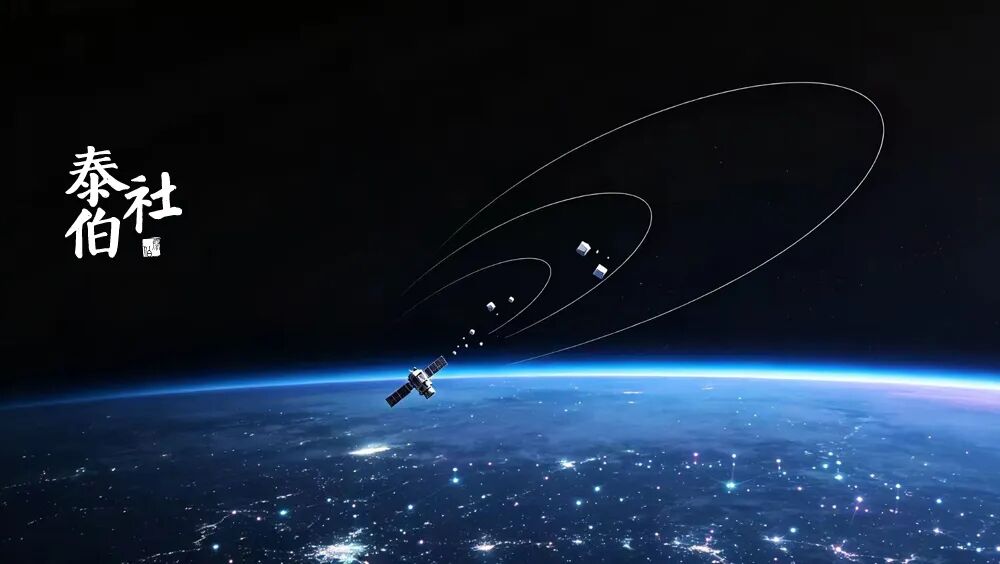
In the global competition for reusable rockets, SpaceX caught the starship with two "chopsticks" and showed the world the ultimate form of rocket recycling.
In China, the first person to lift their chopsticks was Dahang Leap.
Since its establishment, "ground capture+intelligent control" has been included in the technical roadmap. More than two years have passed, and the "chopstick holder" has evolved from a concept to a series of experiments, sets of data, and a tower capture system that is moving towards engineering.
How rockets go home is changing the cost logic of China's commercial aerospace industry.
▍The "optimal solution" for rocket recovery: why is it a "chopstick holder"
How do rockets go home? There are two mainstream paths globally:
One is the landing leg - the rocket lands with four legs and stands steadily on its own. Zhuque III achieved China's first landing leg recovery in August this year, stable and steady; Station "; Come back.
The other is ground capture, including mesh capture and tower capture. Network capture, which refers to the rocket flying into an open large network. In July of this year, the national team's Long March 10B completed the world's first sea based network recovery using this.; Tower capture means that the tower extends its robotic arm, like; Chopsticks "; Just like holding the rocket steady in mid air - this is the path taken by SpaceX starships. Just recently, the 14th flight of the starship completed its first orbital deployment.
Why bother gnawing on the landing leg when it's already stable enough to stop; Ground Capture "; Is this the hardest bone?
Because landing legs mean weight gain, and weight gain means loss of carrying capacity; The impact at the moment of landing and the erosion caused by engine jet reflection can greatly reduce the lifespan of the arrow.
And the "chopstick clip" avoids these problems together: eliminating landing legs, making the arrow lighter and having higher carrying capacity; The tower catches the rocket in the air, greatly reducing the landing impact and extending the lifespan of the rocket body; There are fewer electrical equipment and sensors on the arrow, with less testing content and shorter testing cycles.
But every kilogram of weight saved becomes a difficulty on the ground.
Any disturbance such as high-altitude wind field, rocket attitude deviation, thrust fluctuation, structural vibration... will be amplified into centimeter level deviation at the moment of catching. Completing precise docking during high-speed descent is no less difficult than 'gripping a falling needle with chopsticks in a strong wind'.
▍Anchored immediately: China's first "chopstick holder", chose the difficult path from the first day
At the beginning of its establishment, Dahang Leap pinned its technological roadmap to "ground capture+intelligent control" instead of landing legs.
This is the first domestic enterprise to propose and implement the "chopstick clamp" tower capture and recycling technology route. At that time, "chopstick holder" was still a new term in China's commercial aerospace industry, with no mature experience to follow, and everything had to start from scratch.
The strategic determination of long termism is engraved in every milestone:
- Establish a high-level research and development team led by academicians and advisors;
- Complete the construction of the "Chopstick Clamp" tower recycling verification platform;
- Develop the first domestic recycling tower controller, "Little Firestone";
The ground test of the first "chopstick holder" recycling tower in China has been successfully completed;
The tower intelligent controller "Little Fire Stone" has undergone multiple iterations.
From proposing the concept to completing ground validation, Dahang Leap only took one year. The success of the experiment transformed the "chopstick holder" from a blueprint into a truly engineering system that can withstand load tests.
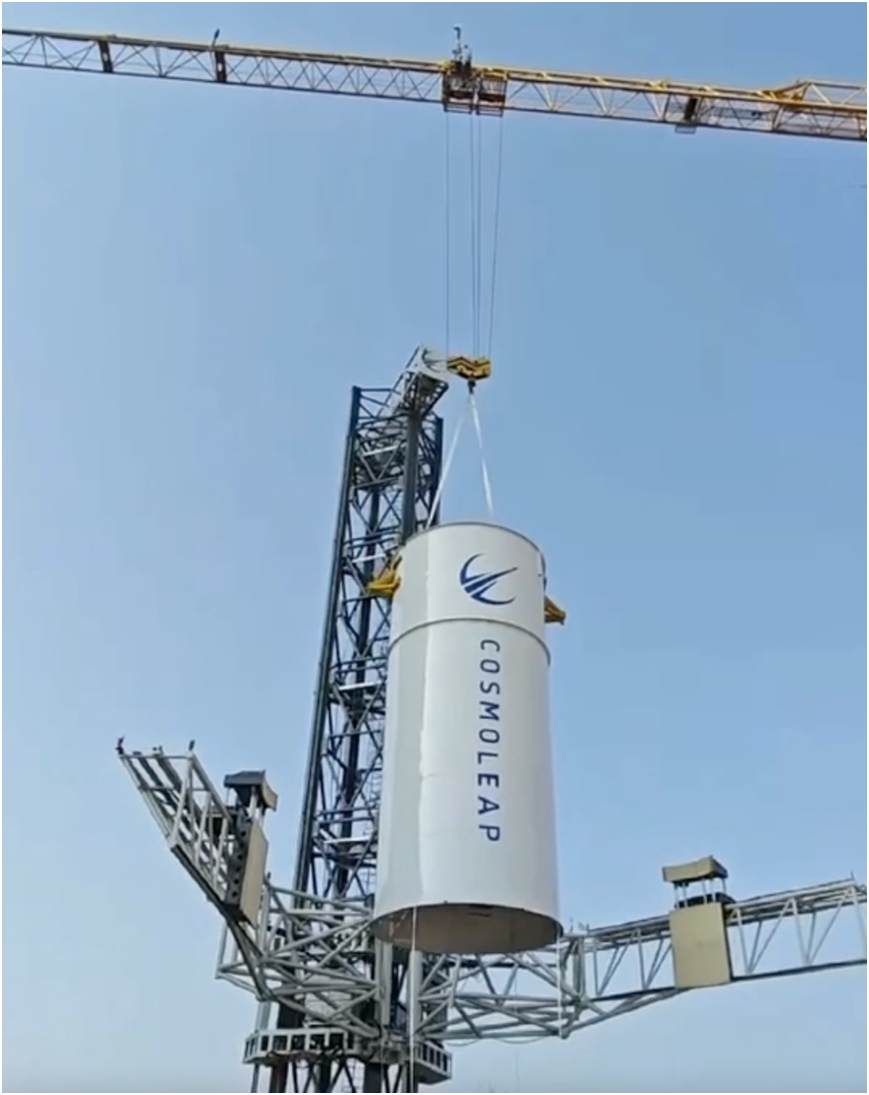
▍"Little flint": centimeter level tower brain
To catch a rocket on a tower, having a robotic arm alone is far from enough. It also requires a smart and fast 'brain'.
The tower control system "Little Fire Stone" developed by Dahang Leap is precisely this brain. After multiple iterations, it aims to achieve centimeter level intelligent control and high-precision landing point control - during the entire process of capturing rockets, the system calculates position and attitude deviations in real time and commands the robotic arm to complete motion compensation in real time.
The engineering capabilities that support this' brain 'are the tower structure, robotic arm, and buffering equipment on the arm that have been iteratively polished through AI simulation. Each round of simulation iteration is approaching the same goal: to adapt the tower system to the recovery scenarios of future high-frequency and large-scale "transition" series recoverable rockets.
Up to now, Dahang Leap has obtained multiple patents related to tower capture, solidifying its core as its own engineering barrier.
▍Hundreds of measuring points: "verify the identity" of the tower
The tower is a massive structure and also a precision instrument. Every structural component of it must withstand extreme tests.
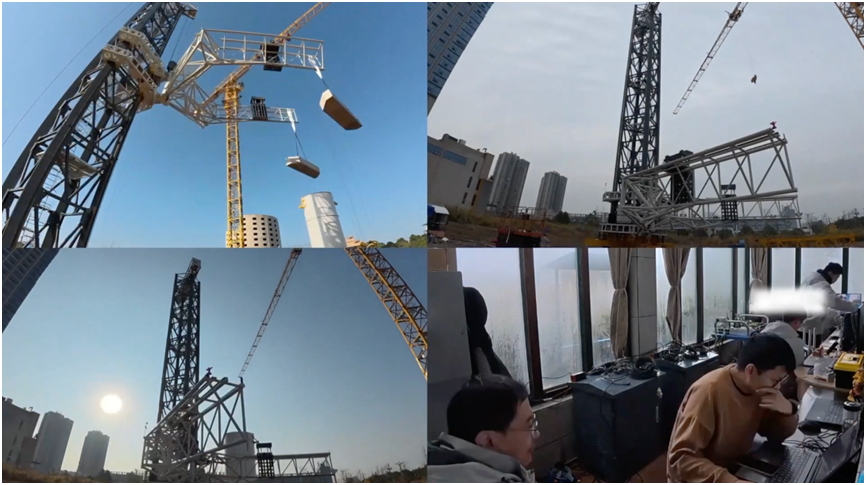
Dahang Leap has successively completed static tests and dynamic capture experiments: through static loading tests and modal tests, strain, acceleration and other types of sensors are arranged on the tower structure to obtain structural response data from hundreds of measurement points.
Hundreds of measuring points mean a comprehensive examination of the strength, stiffness, and dynamic characteristics of the tower.
Data does not lie. Each set of curves is answering the same question: can this system catch a real rocket.
▍Digital Twin+Dynamic Capture: Simulate 10000 times first, then capture once.
The most difficult part of rocket recovery verification is that it is impossible to wait for a real rocket to test before the flight mission.
The solution for Da Hang's transition is "digital twin+dynamic capture":
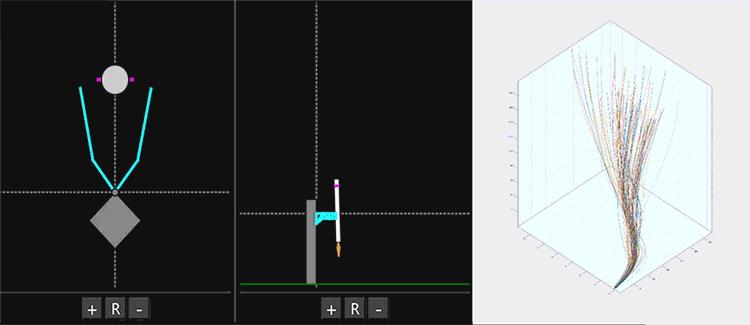
The navigation, guidance, and control system generates different recovery trajectories, which are repeatedly simulated in a digital twin environment to verify the matching between the tower system and the rocket system on the entire trajectory.
From trajectory deviation to capture window, from robotic arm motion planning to buffering strategy, everything runs smoothly in the digital world first;
Finally, closed-loop verification was completed through a real tower system.
Simulating ten thousand times is to ensure foolproof performance when capturing once.
▍ Next stop: Sea
Ground verification is just the starting point. The next step of Dahang's leap has already pointed to a broader stage - the sea.
The company plans to build a recycling tower platform at sea to complete rocket recycling. Sea based recycling means more flexible airspace selection, denser launch frequencies, and also means that tower capture technology will truly enter the era of high-frequency reuse.
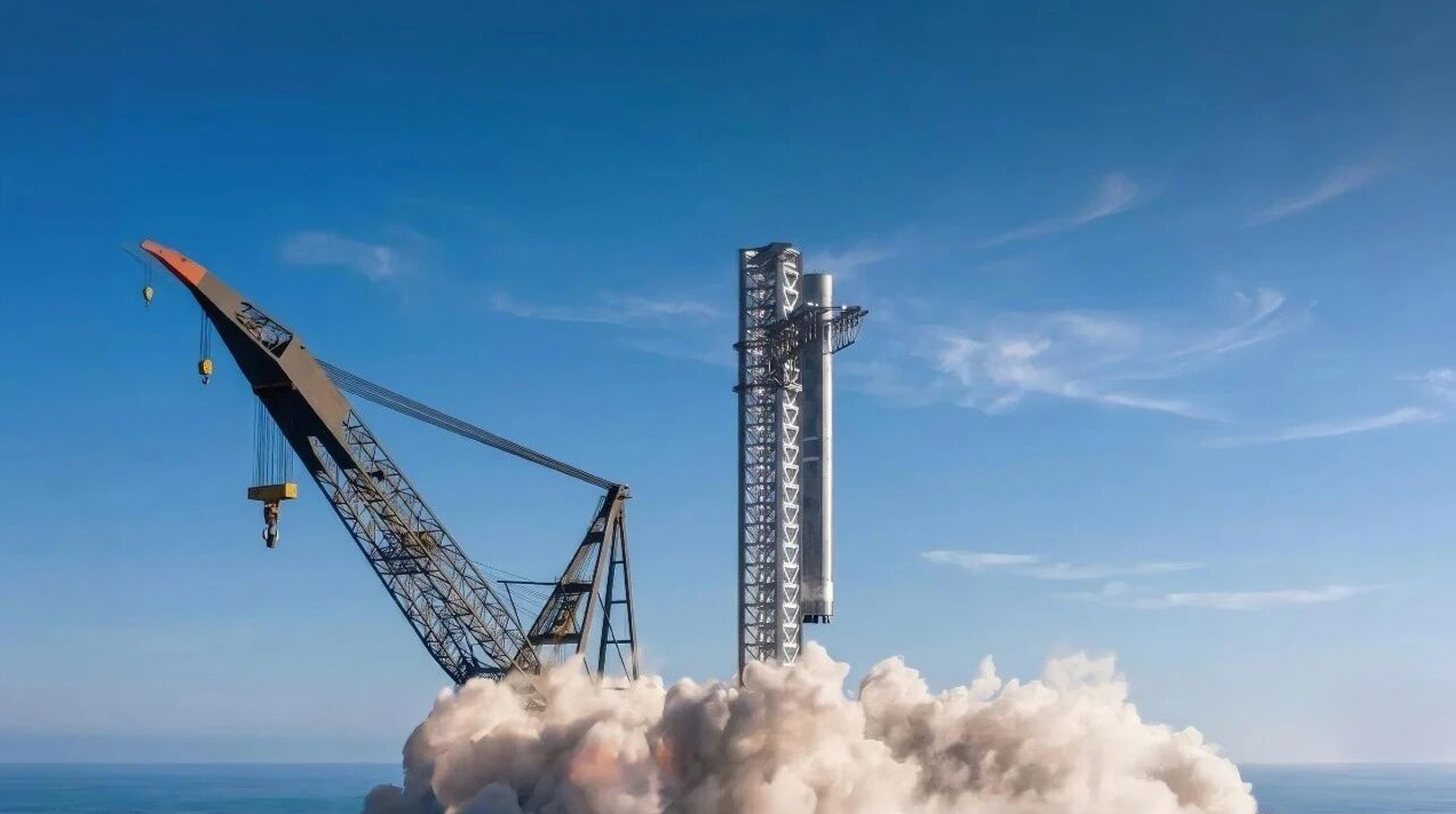
Some people choose landing legs, while others choose "chopsticks". Dahang Leap chose the latter - a more difficult, longer, but ultimately leading path.
And every step on this road is being fulfilled one by one by specific models. As the first domestically developed reusable liquid rocket with a "chopstick clip" tower, the "Jump-1" has recently completed a series of ground tests, including calibration and testing of the secondary engine, cyclic pre cooling test of the pressurized conveying system, joint static test of the secondary frame and storage tank rear bottom, and static test of the secondary instrument compartment structure. The development has been fully accelerated; Moving towards the goal of making its maiden flight in 2027.
From "chopstick holder" to "Jumping One", from ground testing to final assembly delivery, Dahang Jumping is using long-term determination to navigate this most difficult path inch by inch.