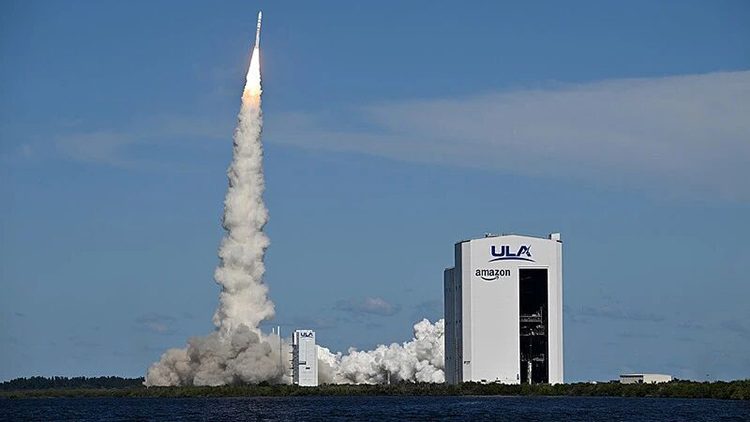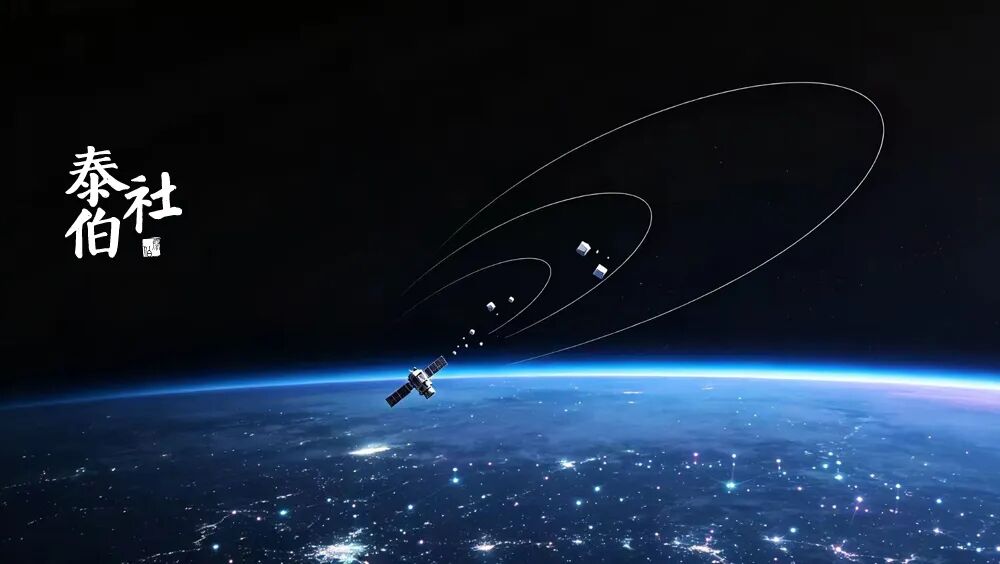
At 12:03 on September 20th, the Lijian-1 Yao-18 carrier rocket launched satellites such as "Super Intelligent Computing One" into its designated orbit in a "one rocket, nine satellites" manner.
This launch presents a new change for in orbit satellites: computing power is entering the core payload of the satellite, and the satellite is evolving from a data acquisition terminal to a computing node.
The "Super Intelligent Computing One" is equipped with optical remote sensing and AI computing payloads.
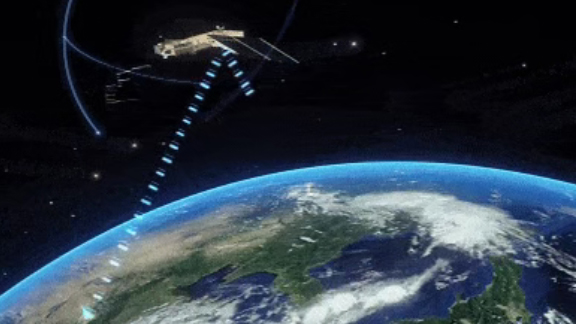
According to the project team, satellites can process images and identify targets in orbit, and only transmit filtered high-value data back to the ground. The data response time for some scenarios can be compressed from several hours to minutes.
The first launch satellite of Pengcheng, which entered orbit with the same arrow, integrates 5G non ground network base stations, core networks, onboard AI computing, as well as laser and microwave communication payloads on one satellite to verify the in orbit coordination of communication, perception, and computing.
A day ago, the Zhuzhou Space Interstellar PIESAT-2 13 to 16 stars entered their designated orbit. These SAR satellites are equipped with on-board intelligent processing and mission planning payloads, which can directly interpret remote sensing data in orbit and output application results to the ground.
Within two days, multiple satellites with in orbit processing capabilities were densely placed into orbit. The verification of space computing power is moving from scientific research demonstration to commercial and engineering deployment, which has also brought new mission sources for commercial satellite and rocket launches.
Satellite data processing is currently the most clear application direction of space computing power.
When a satellite passes through a single ground station, the effective communication window is usually only about 10 minutes, and the original images generated by high-resolution remote sensing satellites at once may reach hundreds of GB
The limited communication window and continuously increasing data volume make satellite ground transmission an efficiency bottleneck for remote sensing applications. Zhijiang Laboratory previously disclosed that due to limited ground station resources and bandwidth, about 90% of satellite data could not be transmitted back to the ground, and the average time for remote sensing data transmission exceeded one hour.
In orbit calculations can first identify fire points, ships, flood ranges, or surface changes, and then transmit coordinates, ranges, and analysis results back to the ground. This processing method can compress the amount of data and shorten the time between satellite observation and ground decision-making.
Emergency disaster relief, ocean patrol, natural resource management, and ecological monitoring require high data timeliness and are most likely to demonstrate the value of minute level response. These scenarios will become the first market for the landing of space computing power.
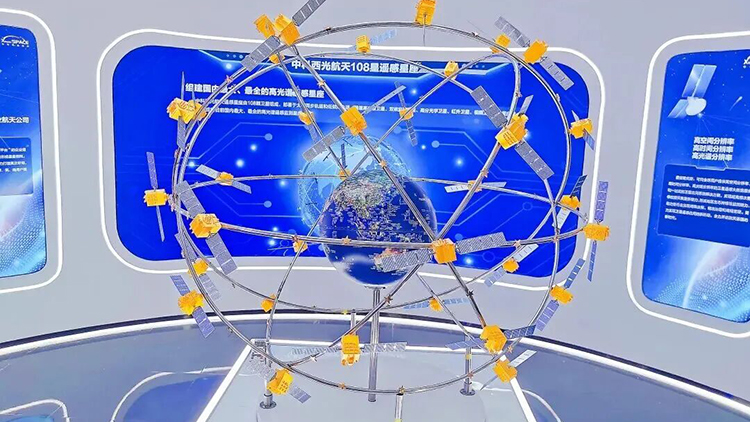
Domestic exploration has extended from single satellites to computing constellations.
The first batch of 12 satellites in the Three Body Computing Constellation to be launched in 2025 will have a maximum computing power of 744TOPS per satellite and an overall in orbit computing power of 5POPS. Afterwards, the first batch of satellites achieved inter satellite laser link building and deployed 11 AI models for in orbit operation.
Inter satellite networking has expanded the application boundaries of space computing power. Multiple satellites can share computing and storage resources, allocate tasks in orbit, and call algorithms according to different regions and scenarios. Model deployment, task scheduling, and data collaboration have become new capabilities for computing satellites.
This change is also restructuring the demand structure of commercial aerospace. Computing satellites require higher performance processors, more stable power sources, faster inter satellite communication, and continuously updated software systems. The demand will be transmitted along the satellite platform, onboard chips, laser communication, operating systems, and data services to the industry chain.
Engineering capability determines the expansion speed of space computing power.
The vacuum environment mainly relies on radiation heat dissipation, and high-density computing will increase the thermal control pressure of the satellite. Anti radiation chips, power systems, and high-speed inter satellite communication also directly affect the performance and lifespan of computational payloads.
The launch capability determines the deployment cost and networking efficiency of computing nodes. Reusable rockets, mass production of satellites, and standardized deployment will become important foundations for expanding space computing power.
Space computing power is adding a new layer of value to commercial aerospace. Rockets are responsible for sending computing nodes into orbit, satellites complete data acquisition and processing, inter satellite networks connect dispersed computing power, and ground applications receive the final results.
This link extends the competition in commercial aerospace from the number of satellites to data processing efficiency.
As more computing satellites enter orbit, participants who can quickly form networking capabilities, match high efficiency scenarios, and continuously deliver data services will have the initiative in the industry of space computing power.