On September 8th, rocket startup Stoke Space announced the completion of the first delivery of a $1 billion Series E funding round.
The leading investors are Point72 Ventures (the technology investment tool of hedge fund guru Steve Cohen) and Spark Capital, and there are also institutions such as Y Combinator on the list of co investors. Including this, Stoke's cumulative financing has reached 2.3 billion US dollars.
CEO Andy Lapsa put it bluntly:; This round of money is used for scaling up - laying infrastructure, expanding production and launch frequency, and more importantly, supplying blood for the research and development of second-generation rockets. "
It's going to do something that no one has ever done before
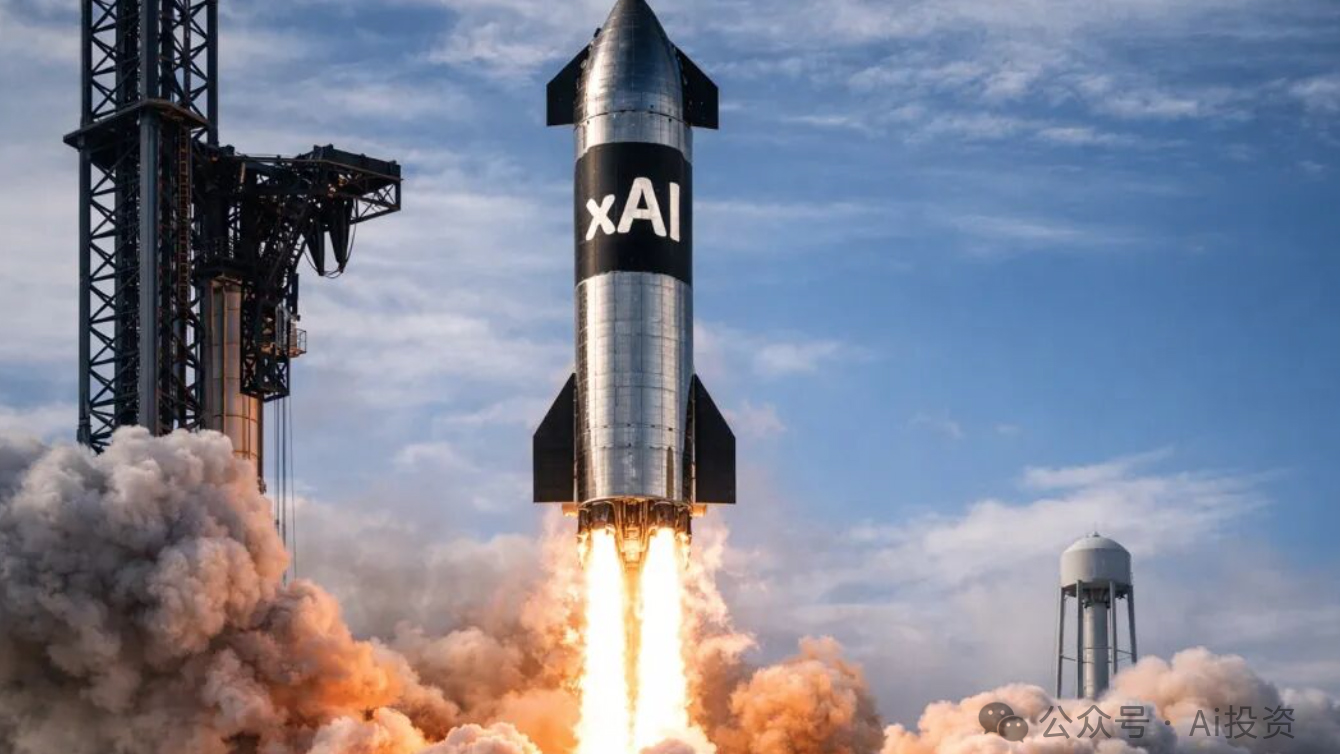
There are many startups around the world making low-cost rockets - Rocket Lab, Relativity, Firefly - all competing with Musk's SpaceX for jobs. But Stoke's ambition is even more extreme: to directly target; Complete Reuse; This Holy Grail.
SpaceX's Falcon 9 only reuses a first stage booster, while Starship is still striving to achieve full rocket reuptake. And Stoke's goal is to have both the first and second stages (the one that launches the payload) return to Earth and be able to be used inexpensively from the beginning.
No one has ever accomplished this in history.
Of course, the amount of money burned is also astronomical. SpaceX has spent over $10 billion on Starship in the past decade, but it has not yet entered orbit. Stoke now holds 2.3 billion ammunition - a bet as big as ambition.
Unique Skill: Giving Rockets; Take a cold shower;
The most difficult level of rocket reuse is the extreme high temperature during the re-entry of the second stage into the atmosphere. SpaceX has been struggling with the selection of heat-resistant materials and structures.
Stoke's solution is unique: allowing ultra-low temperature liquid hydrogen to flow through a heat-resistant layer and actively cooling to remove heat. Lapsa said that this technology has been thoroughly tested on the ground and will be deployed in actual combat during its maiden flight.
" We will intentionally use coolant; Excessive flow; It is better to over cool than to remain conservative during early flight. " ——It sounds like an engineer's OCD, but in; It must be done the first time; The aerospace industry is precisely a virtue.
Schedule: First flight in 2027, big move in 2029
Nova Pathfinder (first generation aircraft): expected to make its maiden flight in early 2027. Capable of delivering a payload of 3 tons into low Earth orbit - Lapsa believes this will be among the top rocket manufacturers in the United States; Debut has the strongest transportation capacity; The initial model. Even more rare is that the rocket has already sold the launch contract.
Nova Block 2 (second generation aircraft): Capacity increased to 15 tons, slightly surpassing Falcon 9, with the goal of entering operation by 2029.
This 2029 is very subtle - according to Musk, it is the time when Falcon 9 plans to retire.
Targeting SpaceX; Soft spot ";
Lapsa has a saying worth pondering, which satellite operators must understand:
After SpaceX's Starship goes on board, external clients will compete with SpaceX's own internal projects for space, and may even pay a premium for it. And Stoke has made it clear that he does not intend to operate his own space assets and will focus on it; Third party rockets;.
" The speed of space economy expansion depends on the speed at which rockets are launched, especially those serving third-party customers. " This translates to: SpaceX is both a referee and an athlete, and the market needs a pure athlete.
Write at the end
In the aerospace industry, schedules are always meant to be broken, and rockets that can go up on time are rare. For Stoke, being able to orbit itself is a victory.
But the significance of this gamble goes beyond that: if complete reuse were really done by a startup company first, SpaceX would have maintained its dominance for over a decade; Cost monopoly; It will be torn open. The $2.3 billion purchase is not just a rocket, but a lottery ticket that rewrites the industry landscape. The first flight in 2027 is worth a result.