Top European mobile operators are teaming up to enter the field of satellite connected smartphones, directly challenging Musk's Starlink's dominant position in Europe.
According to Bloomberg citing informed sources, Deutsche Telekom Orange、 Vodafone and Telef ó nica are in preliminary negotiations to form an alliance and plan to jointly bid for satellite spectrum resources reserved by the European Union for local operators.
The background of this move is that the EU is actively promoting the enhancement of Europe's autonomous satellite capabilities and restricting international companies' spectrum access in the upcoming 2 GHz frequency band auction.
Once formed, this alliance will directly compete with SpaceX's Starlink business. Starlink currently dominates the field of satellite connected mobile phones, providing SMS, data, and voice services from orbit to ground terminals. However, SpaceX is currently unable to independently provide such services within the EU due to a lack of EU spectrum authorization.
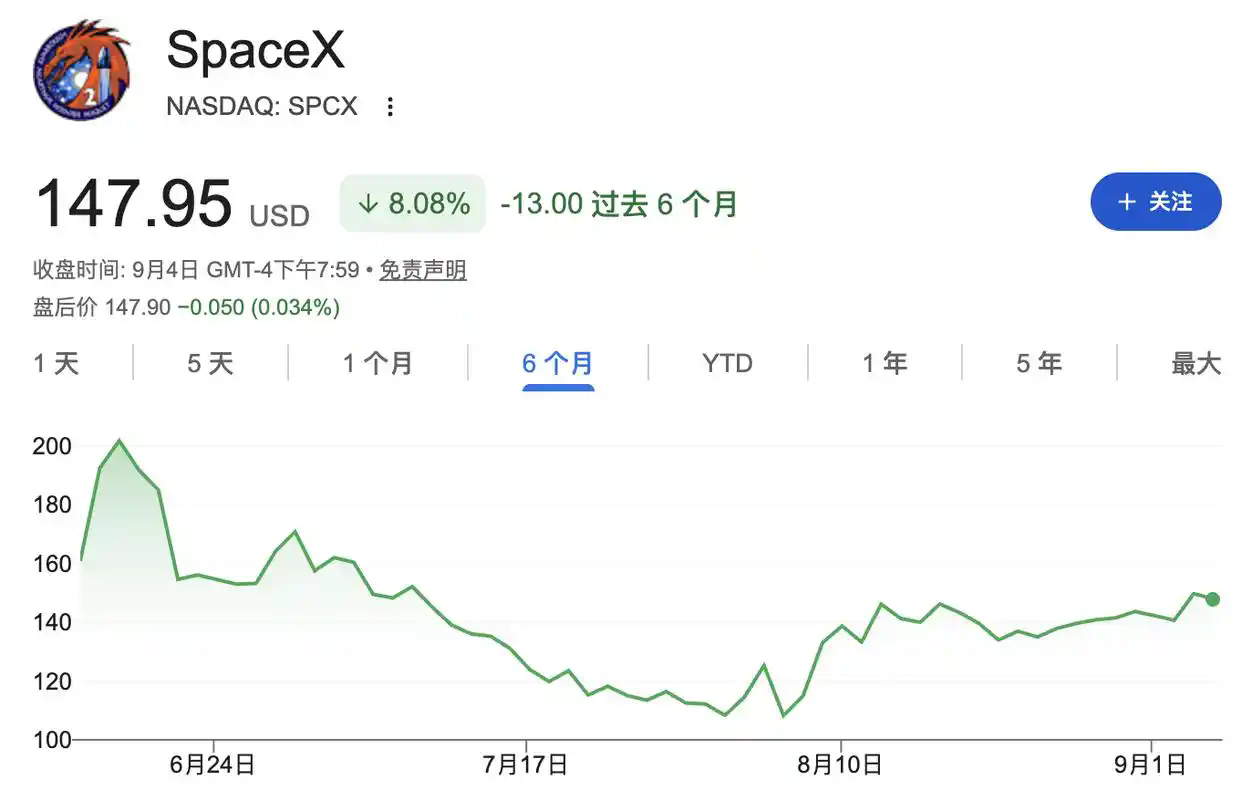
On Monday, the US stock market was closed for Labor Day, and SpaceX rose 4.56% on the weekly line last week, with its stock price at a nearly two month high.
Only European domestic companies are allowed to bid on one-third of the frequency band
The European Union is formulating new rules for satellite access in the 2 GHz frequency band, with plans to reserve one-third of the frequency band for local companies to bid on. Existing spectrum licenses will expire in 2027. According to the proposal of the European Union, any satellite operator who wants to acquire this part of the frequency band must have a majority stake held by European companies.
This move aims to promote the establishment of independent satellite service capabilities in Europe. Despite the fact that the vast majority of densely populated areas in Europe have well-established ground wireless infrastructure coverage, the EU is still seeking to build a usable local satellite service system in the context of SpaceX's continued expansion of direct to consumer business.
SpaceX explicitly opposes the EU's proposal to restrict international companies' spectrum access. At present, SpaceX has provided Starlink satellite broadband services in most parts of Europe and has signed direct device service agreements with multiple European partners, including Deutsche Telekom.
It is worth noting that British operator Vodafone and American satellite company AST SpaceMobile have established a joint venture with each holding 50% of the shares, and the latter also provides satellite direct mobile phone services.
If the proposal currently under discussion in the EU is ultimately implemented, Vodafone will need to adjust the equity structure of the joint venture to meet the requirement for European companies to hold a majority stake in order to participate in the relevant frequency band bidding.
Two thirds of the remaining frequency bands are reserved for IRIS ², with half allowing international companies to bid
The EU plans to reserve an additional one-third of the spectrum for autonomous communication services provided by IRIS ².
IRIS ² is a satellite constellation built by a consortium led by SES SA, Eutelsat Communications SACA, and Hispasat, a Spanish satellite company. Hispasat will provide limited satellite direct to mobile phone functionality.
This constellation will not be put into use until 2029, and will initially focus on providing broadband services.
As for the last third of the spectrum, international companies will be eligible to participate in the auction.