Musk's business landscape continues to expand. On June 27th, it was reported that the Federal Trade Commission (FTC) of the United States has approved SpaceX's acquisition of Mesh Optical Technologies, an optical communication company, marking another wave of intense mergers and acquisitions in SpaceX's recent history.
The FTC disclosed this transaction in a notice, stating that the antitrust review of the transaction has been included in the expedited approval process, meaning that regulatory authorities believe that there are no obvious competition issues with this merger.
Mesh was founded by a former SpaceX engineer, specializing in optical communication technology for data centers. It claims that its optical transceivers have higher energy efficiency and lower latency compared to existing solutions. The "stealth mode" just ended in February this year, announcing the completion of a $50 million financing led by Thrive Capital.
This acquisition is the latest development in SpaceX's recent expansion efforts. Previously, SpaceX had completed the acquisition of AI programming startup Cursor and signed multiple computing power cooperation agreements with Anthropic, Google, and AI startup Reflection.
The above layout is closely related to the commitments made by SpaceX during its initial public offering (IPO), with large-scale satellite deployment and space AI computing power as the core growth narrative.
Mesh technology aligns with SpaceX's space computing strategy
Mesh is developing optical transceivers that rely on optical signals to transmit information between data centers. The company claims that it outperforms existing solutions in terms of energy efficiency and latency.
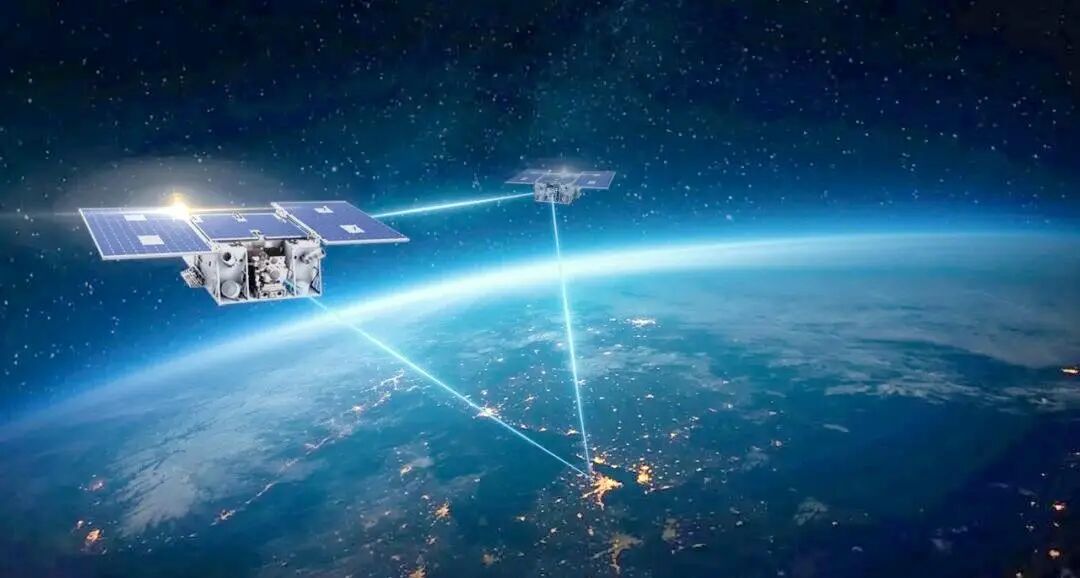
Mesh was founded by SpaceX engineers who had participated in the research and development of laser communication technology of Starlink Internet satellite system, and expressed the hope that its technology would be applied to the space field in the future.
One of the key selling points of Elon Musk's SpaceX, which recently completed a record breaking IPO, is its plan to launch up to one million satellites into low Earth orbit to provide complex computing power for artificial intelligence.
Similar to Starlink, SpaceX's future space data center network, recently named Starmind, is expected to rely on laser communication technology between satellites.
Intensive mergers and acquisitions, accelerating the fulfillment of IPO promises
This potential acquisition follows SpaceX's acquisition of AI startup Cursor, indicating that Musk is advancing the development blueprint he outlined to investors during the IPO.
The introduction of cursor aims to enhance the code generation capability of SpaceX's xAI laboratory, which is considered a relatively weak link in the laboratory. At the same time, SpaceX is also advancing data center construction in Tennessee and Mississippi.
At the level of commercializing computing power, SpaceX has recently reached multiple partnerships with Anthropic, Google, and AI startup Reflection to open up its chip and data center resources to external customers, providing specific support for the business model depicted in the IPO.
In addition to the AI layout, another important commitment of Musk's business landscape is to create "Everything App". This includes launching a banking and payment service called X Money on social platform X.
This week, Musk has started expanding the access to X Money to some US X Premium subscribers.