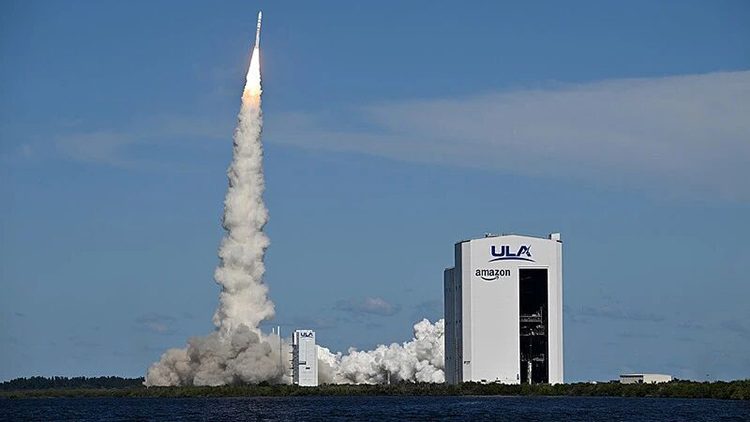
In 2026, the two national strategic emerging industries of commercial aerospace and low altitude economy will enter a critical stage of deep iteration and structural optimization. The reusable rocket technology in the commercial aerospace field is becoming increasingly mature, and private carrier rockets have successfully completed a recyclable launch for the first time. The low-cost, high-frequency space launch mode is expected to land; The manned eVTOL and large cargo unmanned aerial vehicles in the low altitude economic field continue to carry out test flights and normalized demonstration operations. The low altitude infrastructure and airspace management system in various regions continue to be improved, and commercial application scenarios are accelerating their landing and deployment.
Since 2021, the Top 100 Commercial Aerospace Enterprises list of Taibo Think Tank has been released for five consecutive years, accumulating profound industry influence. It is one of the most authoritative and influential industry lists in the domestic commercial aerospace field, widely recognized by government regulatory departments, investment institutions, and industry media. In 2024, Taibo Think Tank launched the list of the top 100 low altitude economies, further filling the research map of the aerospace industry.
To accurately sort out the competitive landscape of the aerospace industry in 2026 and objectively identify the development momentum of high-quality enterprises, Taibo Think Tank has officially launched a survey on the 2026 Top 100 Commercial Aerospace Enterprises and 2026 Top 100 Low altitude Economic Enterprises.
This ranking survey adheres to the core principles of objectivity, neutrality, and rigor throughout the process, using the mature selection methodology of Taibo Think Tank. There are no fee items for participating in the evaluation, and the professionalism, authenticity, and authority of the ranking results are guaranteed through multidimensional data verification, industry expert review, and cross validation of industry clues.
01 Research and Compilation Standards
The research and compilation of this year's Top 100 list will be mainly based on the market value/valuation of enterprises, and combined with other relevant indicators to comprehensively evaluate the strength of enterprises. In order to ensure the fairness and objectivity of the selection, we sincerely invite your company to participate in this research and preparation activity, and provide the following information:
Latest valuation data of the enterprise:Please submit the latest valuation (market value) data of your enterprise to provide reliable basis for a comprehensive evaluation of its strength..
Explanation of Financing Situation in the Past Year:If your company has completed financing in the past year, please provide detailed core information such as financing time, financing amount, and investors to help accurately assess the development vitality of the enterprise..
02 RegistrationWhenBetween and by
Registration Time:The application process will begin today and end on September 30, 2026.
Registration channel:Scan the QR code below to participate in registration

03List review and release
This ranking will strictly follow the full process evaluation mechanism of online application, preliminary screening of materials, enterprise research, expert review, and final finalization.
The 2026 Top 100 Chinese Commercial Aerospace Enterprises list will be officially released to the public at the Space Economy Forum to be held in mid November 2026. The 2026 Top 100 Chinese Low altitude Economic Enterprises list is scheduled to be officially released by the end of October 2026 for related industry activities.
Unlike most industry studies that only focus on top industry benchmarks, this survey will add a unique observation dimension of reverse reflection and launch the "List of Global Aerospace Economy 'Fallen' Enterprises". The research sample focuses on market entities in the commercial aerospace and low altitude economy sectors that have experienced business stagnation, track exits, mergers and acquisitions, and business liquidation. By recording the exits and iterations in the industrial wave, it provides valuable reference for policy makers to optimize the supply of industrial systems, investment institutions to identify track risks, and enterprise managers to calibrate strategic decisions.