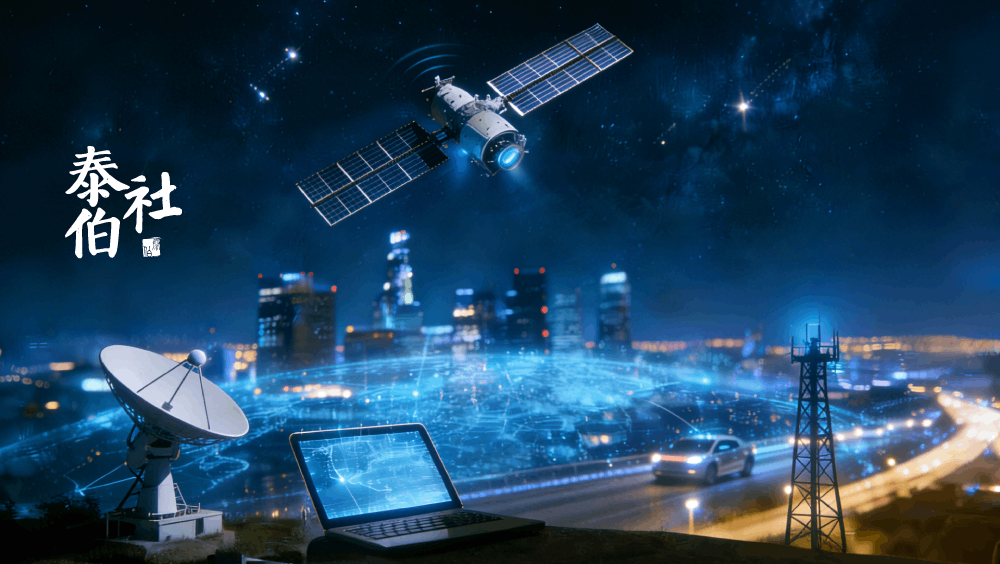
Google is attempting a groundbreaking infrastructure experiment, planning to transfer high-energy AI data centers to space to address bottlenecks such as ground power shortages and planning disruptions.
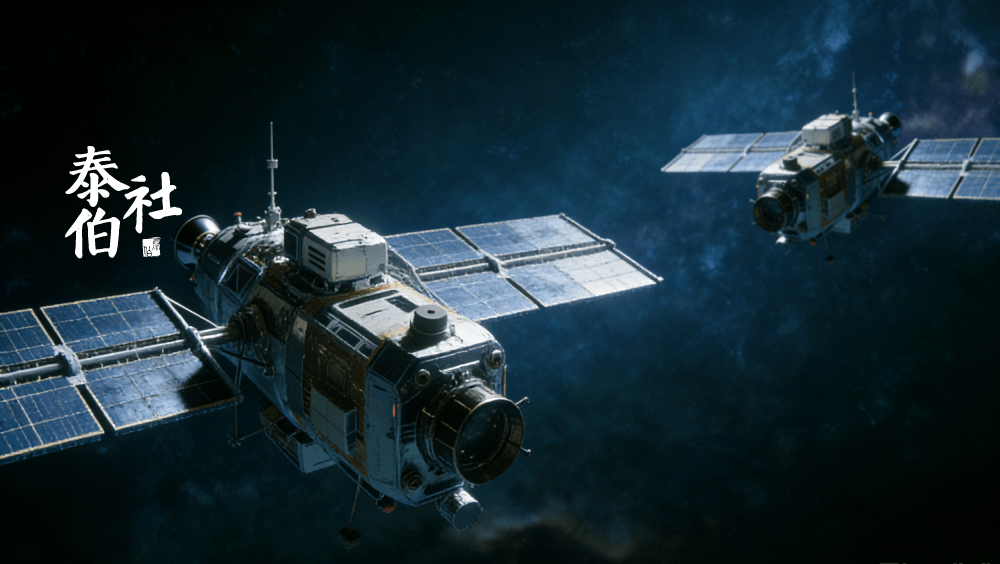
According to a report by the Financial Times on the 17th, Google has revealed a plan called "Project Suncatcher" aimed at building a prototype of a space data center powered by solar energy. The project is not about building a single orbital giant rock, but a cluster of 81 satellites equipped with AI chips that will fly together in space and process data. As the first step of this plan, Google will collaborate with satellite company Planet to launch two prototype satellites into low Earth orbit in 2027.
The core logic of this move lies in utilizing the unique environmental advantages of space, especially the nearly constant solar energy provided by the sun synchronous orbit, and the exemption of land and water resources required for ground construction. For investors, this sends a clear signal that despite the limitations of the physical world, the technology industry is still trying to prove that AI has infinite scalability. If the queries of AI models such as Gemini can be processed in space and transmitted back to Earth, it will completely change the cost structure and energy dependence of computing infrastructure.
However, this grand idea is facing severe technical feasibility and economic challenges. After Microsoft ended its underwater data center project (Project Natick), the industry is cautious about the difficulty and cost-effectiveness of maintaining data centers in extreme environments. In addition to the high launch and maintenance costs, the radiation and debris impact risks in the space environment, as well as the increasingly crowded rail transit, have cast a shadow over the prospects of this' space 'program.
Escape from Earth: Google's' Chasing the Sun 'Plan
According to a preprint paper released by Google researchers last month, Project Suncatcher envisions operating in a sun synchronous orbit approximately 650 kilometers away from Earth. This orbit can ensure almost uninterrupted power supply through solar panels carried by satellites, providing power for high energy consuming AI loads.
Unlike traditional ground data centers, this architecture relies on the collaborative work of satellite clusters. These satellites not only need to handle computing tasks, but also need to maintain communication during high-speed flight. This plan aims to avoid many obstacles faced by ground data centers, including increasingly complex planning approval procedures, opposition from local communities, and the existing power grid's inability to meet the huge energy gap caused by the rapid expansion of AI. According to industry estimates, the energy demand created by AI is difficult to meet within the existing resource boundaries of the Earth.
Space Minefield: Collision Risks and Technical Challenges in Crowded Orbits
Although space provides unlimited energy potential, its technological risks cannot be ignored. Mojtaba Akhavan Tafti, a space scientist at the University of Michigan, pointed out that the orbit planned by Google is also one of the most crowded paths in low Earth orbit. In order to achieve interconnectivity, the distance between these satellites is only 100 to 200 meters.
Mojtaba Akhavan Tafti warns that the error margin of orbital navigation is almost zero at such close distances. Once a single impact occurs, it may not only destroy a satellite, but also trigger a chain reaction, leading to the destruction of the entire satellite cluster and scattering millions of fragments into the already "minefield" orbit. According to data from the European Space Agency, there are currently over 1.2 million fragments in orbit that exceed 1 centimeter in size, any of which could cause catastrophic damage. With the rapid increase in rail transit, the possibility of the Kessler effect - where debris triggers chain collisions that render the track unusable - is on the rise.
In addition, Google's paper also acknowledges that space radiation can degrade electronic devices and damage data. What's even more tricky is that, unlike ground facilities, space data centers are almost impossible to perform remote hardware maintenance, and how to handle faulty hardware or scrapped satellites remains an unsolved problem.
Microsoft's underwater project failure and high "sky high" cost
Before Google, Microsoft had also explored using unconventional environments to solve data center cooling and energy consumption problems. In 2018, Microsoft sank an underwater data center called Project Natick off the coast of Scotland. However, according to reports, the project has ended and Microsoft has stated that there are no further underwater plans.
Compared to the seabed, the difficulty of establishing data centers in space increases exponentially. Although the cost of rocket launches is continuously decreasing through the efforts of companies such as SpaceX, at this stage, the unit cost of space power is roughly equivalent to that of ground power, and there is no significant cost advantage. When asked for specific comments, Google only cited relevant preprint papers and blog articles.
The space encirclement movement of tech giants?
In addition to technical and cost barriers, the project has also raised concerns about space governance. Astronomers are concerned that more satellite constellations will further interfere with scientific observations. At present, there are nearly 16000 satellites in operation around the Earth, of which nearly 9000 belong to Musk's Starlink network, and plans for 15000 new satellites are under review. Starlink has been criticized for its interference with optical images caused by reflected light and interference with radio astronomy caused by radio leakage.
The current space industry is gradually becoming an arena where tech giants such as Jeff Bezos and Musk lack rules and constraints. Google's plan may not only exacerbate light pollution and radio interference, but also expose the lack of effective governance mechanisms for space as a public resource. For the market, this is both a bold gamble showcasing the unlimited potential of AI and a metaphor for the industry's "excessive expansion" under energy anxiety.