As 2025 draws to a close, China's commercial aerospace industry is experiencing a dual explosion of policies and markets.
At the policy level, the National Space Administration has issued the "Action Plan for Promoting High Quality and Safe Development of Commercial Aerospace (2025-2027)", which systematically deploys the target tasks, key directions, and implementation paths for aerospace development in the next three years. Subsequently, it announced the establishment of the Commercial Aerospace Department, marking the establishment of a dedicated management organization for China's commercial aerospace industry and promoting its standardized and high-quality development.
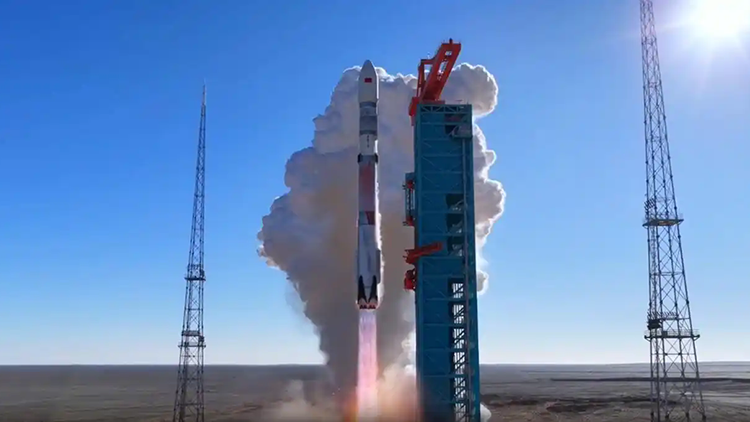
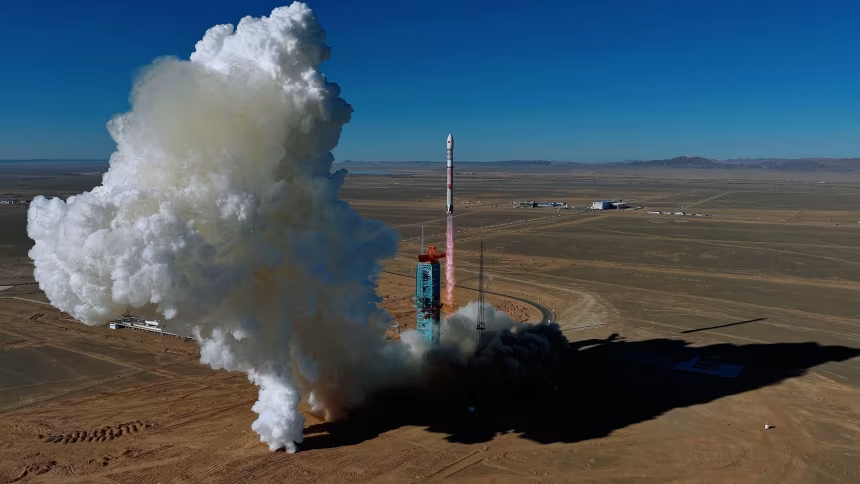
At the market level, a series of recent launch activities have greatly boosted industry confidence: the first flight of the Blue Arrow Aerospace "Zhuque-3" rocket successfully entered orbit, reusable rockets such as the Long March 12A and Tianbing Technology "Tianlong-3" are queued for launch, and the Long March rocket has achieved "three launches per day", setting a new record for launch density.
At present, China's commercial aerospace industry is at a critical moment of technological transformation. However, as carrier rocket technology gradually moves towards "recyclability and low cost", a more profound industrial proposition emerges: when "going to space" is no longer an obstacle, what will the second half of commercial aerospace compete against?
As upstream and downstream enterprises in the industry chain accelerate their layout and compete for market opportunities, Zhongke Xingtu, as a leading enterprise in the domestic aerospace information field, adheres to the development concept of "strengthening towards the sky and focusing on the cloud", proposes the "4+2" strategic plan for commercial aerospace, closely follows the national strategic direction, and expands the competitive dimension from a single technological or product advantage to a systematic ecological construction capability.
1. "4+2" Strategy: From Space Infrastructure to Cloud Ecology
The commercial aerospace "4+2" strategic plan of Zhongke Xingtu, namely the "four characteristic constellations": space computing constellation, space sensing constellation, meteorological sensing constellation, and electromagnetic sensing constellation; Two major cloud platforms: Star Map Space Cloud and Star Map Cloud.

Among them, the four major characteristic constellations provide solid guarantees for data acquisition. The space computing constellation focuses on the development trend of "days and days calculation", strengthens the in orbit processing of remote sensing data and satellite interconnection capabilities, and drives industrial upgrading; Space perception constellation focuses on space-based monitoring of space targets, achieving collision warning and autonomous avoidance of spacecraft, and improving the level of space transportation services; Meteorological perception constellations accurately detect the Earth's atmospheric layer, providing refined meteorological services for fields such as aviation, navigation, and urban safety; The electromagnetic sensing constellation is designed to meet the needs of spectrum control and low altitude economy, ensuring electromagnetic spectrum and low altitude security.
And the two cloud platforms build the core hub for data processing and services. The "Star Map Space Cloud" creates an integrated system for measuring, operating, and controlling space traffic, providing safe and efficient management services for large-scale commercial constellations; Star Map Cloud deeply integrates data, computing power, and application capabilities to form a full process online service system from data acquisition to industry applications, and builds an open and collaborative service ecosystem.
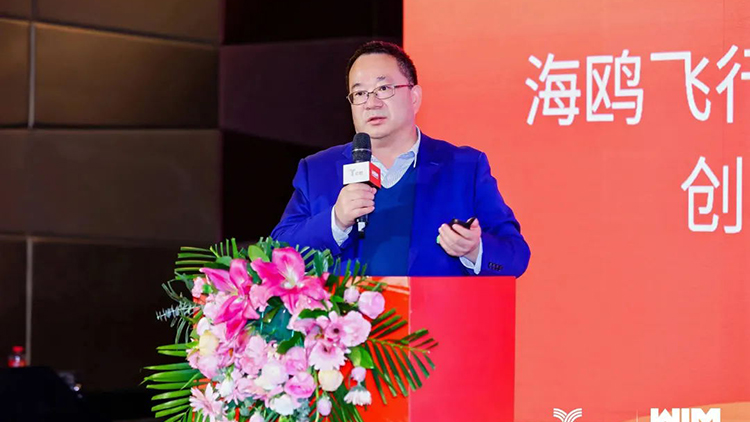
Hao Xuetao, Vice President of Zhongke Xingtu and General Manager of the Commercial Aerospace Strategy Department, stated that Zhongke Xingtu is building various commercial constellations to strengthen its ability to perceive data from multiple layers of the Earth; Focusing on space computing power to build space-based capabilities for rapid processing and transmission of big data; Build a space traffic management service "Space Cloud" system to fully empower communication, navigation, and remote sensing satellites, supporting "day to day calculation". At the same time, relying on cloud service platforms, a complete value chain of satellite data from acquisition to application has been built, creating an open, collaborative, intelligent and efficient aerospace information service ecosystem.
It is reported that in May 2024, Zhongke Xingtu has completed the overall design of the first phase of the "4+2" commercial aerospace industry chain layout, marking the implementation stage of the strategy. In July of the same year, the Party Secretary and President of the company, Shao Zongyou, officially announced the plan to the public.
2. Ecological closed-loop: an inevitable choice based on industry pain points
The proposal of the "4+2" strategy stems from Zhongke Xingtu's profound insight into the core pain points of current commercial aerospace. Hao Xuetao pointed out that there are currently the following bottlenecks in commercial aerospace application services:
One is satellite resources. In cooperation with the upstream and downstream of the industrial chain, the satellite data application industry faces the common challenge of "limited satellite resources", especially the scarcity of high-precision and high-quality satellite resources. This resource shortage affects the timeliness and availability of data acquisition in high demand scenarios, affecting the overall response speed and accuracy of data services
The second is data quality. There are technical bottlenecks such as "data timeliness" and "quality stability" in the link from data acquisition, processing to application. How to ensure rapid response of data in emergency and other high timeliness scenarios, and how to ensure consistency and reliability of multi-source satellite data
To this end, Zhongke Xingtu has chosen to build a full chain service system covering "perception data computing power model application", gradually forming a closed-loop ecosystem by integrating satellite resources, building cloud platforms, and laying out independent constellations.
Hao Xuetao introduced that Zhongke Xingtu integrates a large amount of commercial and civilian satellite resources through the Star Map Cloud platform, ensuring that in the case of tight satellite resources, high-quality data can be obtained through platform scheduling and intelligent allocation. At the same time, establish long-term and stable cooperative relationships with satellite operators to ensure priority access to necessary data resources at critical moments.
In addition, in response to the shortage of satellite resources, Zhongke Xingtu actively communicates with industry partners and government departments, provides feedback on market demand for satellite resources, and proposes a strategic plan for building an independent constellation. After the construction of these constellations is completed, it will effectively alleviate the problem of satellite resource shortage, improve the frequency and accuracy of data collection, enhance data timeliness and quality stability.
III. Strategic Implementation: Business Matrix Collaborative Efforts
The blueprint has been drawn, the key is to execute it. According to the information, Zhongke Xingtu has decomposed the "4+2" strategy into various specialized subsidiaries through its group business matrix, providing strong support for the implementation of the strategy. At present, multiple achievements have been preliminarily demonstrated.
In the field of satellite manufacturing, Zhongke Xingtu has acquired the capability to develop aerospace integrated electronic systems through the acquisition of Xingtu Tianchen.
The staff of Xingtu Tianchen introduced that its independently developed 'Commercial Rocket Space based Measurement System' has broken the limitations of traditional rocket measurement and control 'watching the sky to eat' - even in rainy and cloudy weather, cloud cover, it can achieve uninterrupted and stable tracking throughout the day, clearing the technical barriers for the large-scale commercial use of reusable rockets. At present, the system has entered the stage of market promotion.
In addition, the commercial aerospace integrated electronic system products of "Tianjian" and "Tianxing" effectively meet the needs of intelligent satellite measurement and operation control, as well as high-frequency and recyclable launch vehicles, demonstrating the company's technological strength in the commercial aerospace field.
In terms of operational services, Xingtu Measurement and Control, a subsidiary of Zhongke Xingtu Holdings, is the "first commercial aerospace stock" of the Beijing Stock Exchange. Its main business covers aerospace measurement and control management, space situational awareness, and satellite in orbit services.
In November of this year, Star Map Control officially released the "Star Eye" space perception constellation in Beijing, aiming to provide comprehensive space situational awareness services for commercial space activities; In December, during the launch mission of the reusable carrier rocket Zhuque-3, Star Map Measurement and Control provided full support, calling multiple sets of rocket telemetry receiving equipment to obtain telemetry data for the first stage and key engineering data for the second stage of the rocket. This laid an important foundation for optimizing the design of subsequent models, improving overall reliability, and achieving sub stage recovery and reuse.
The market performance confirms the effectiveness of the strategy. In the first half of 2025, the commercial aerospace sector of Zhongke Xingtu achieved a revenue of 193 million yuan, accounting for 14.34% of the company's total revenue, a significant increase of 137.51% year-on-year, and a strong growth momentum.
At present, China's commercial aerospace industry has entered a "deep water zone". Under the guidance of national strategy, every step of exploration by pioneers will provide important references for the future of the industry. Hao Xuetao stated that Zhongke Xingtu will strictly follow policy requirements, carry out satellite data applications in a more scientific and standardized manner, and strictly ensure data security; At the same time, the company will increase its research and development investment, efficiently utilize its capabilities and resources, fully utilize policy conditions, promote industry standard construction, and drive technological innovation and industrial development.