On November 26th, Zhongke Xingtu Measurement and Control Technology Co., Ltd. (referred to as "Xingtu Measurement and Control") officially released the "Star Eye" space perception constellation plan in Beijing. This constellation consists of 156 satellites and is dedicated to providing innovative solutions for space traffic safety management challenges.
At the meeting, Wu Yirong, academician of the CAS Member and academic president of the Aerospace Information Innovation Research Institute, Shao Zongyou, secretary of the Party Committee and president of China Science Star Image Co., Ltd., Hu Yu, chairman of China Science Star Image Measurement and Control Technology Co., Ltd., and Niu Wei, president, jointly announced the constellation.
On site news shows that Hu Yu is the person in charge of the "Star Eye" space perception constellation. It is reported that the "Star Eye" constellation will be equipped with payloads such as wide field cameras, infrared cameras, imaging cameras, electromagnetic monitoring, multispectral cameras, computing power units, and intelligent processing software.
The first phase of the constellation is planned to build a high-performance sensing backbone constellation consisting of 12 satellites, which has the ability to independently observe and catalog low orbit space targets, while also taking into account on-demand observation of high orbit key areas, highlighting the improvement of short arc rapid orbit determination and anomaly recognition capabilities.
The second phase of the constellation is planned to build a low-cost perception enhancement constellation consisting of 144 satellites, which has the ability to independently observe and catalog low orbit space targets. The integrated design of payload and satellite platform will reduce costs, and large-scale deployment will be adopted to improve the timeliness of low orbit space observation. The focus will be on solving the rapid cataloging and orbit determination of maneuvering and newly entered orbit targets.
In terms of launch schedule, the "StarEye" constellation is expected to launch two high-performance sensing test stars in the first half of 2026; Launch 10 engineering stars in 2027, forming a 2-hour update and release capability; After 2028, 144 enhanced satellites will be launched, forming a 30 minute update and release capability, and N comprehensive satellites will be released. Comprehensive perception satellites will be deployed for key targets, forming multi-dimensional observation capabilities such as electromagnetic imaging, multispectral, infrared, etc.
According to the data, the "Star Eye" constellation will be based on the independently developed "Insight" space information analysis platform and space management service platform - Space Cloud - for star chart measurement and control. It will track, orbit, and catalog satellites in orbit, monitor space debris, analyze satellite orbit data, predict collision risks, and provide accurate and efficient space traffic management data service support for satellites
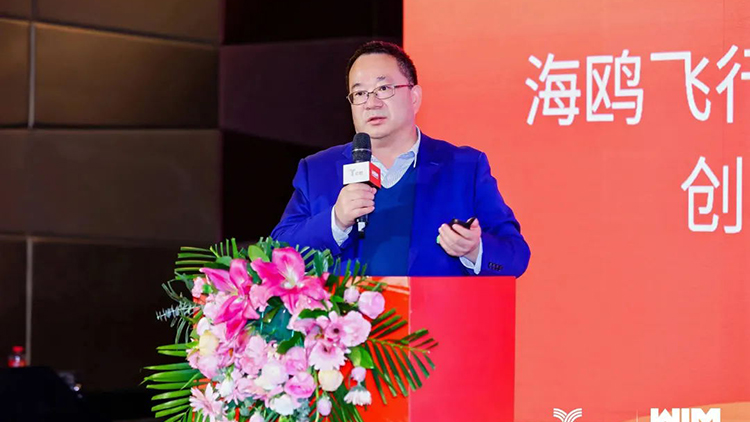
Wu Yirong introduced in his on-site speech that the preliminary research, simulation verification, engineering design, data processing, and operation control of the constellation system will be independently completed by the company, while the satellite platform and some payloads will be jointly developed by top professional units, universities, and research institutes in the industry.
At present, the accelerated deployment of constellation plans both domestically and internationally has led to a significant increase in the number of satellites in orbit and heightened collision risks, posing a threat to the sustainable development of the space environment. Recently, the "Action Plan for Promoting High Quality and Safe Development of Commercial Aerospace by the National Space Administration (2025-2027)" was released, emphasizing the adherence to coordinated development and safety, and incorporating commercial aerospace into the overall layout of national aerospace development. In the national "15th Five Year Plan", it is explicitly proposed to build a space power strategy and strengthen the construction of national security capabilities in emerging fields such as space. Space situational awareness, as the fundamental support for space security, is becoming increasingly important.
In terms of star chart measurement and control, in the future, we will focus on improving our space management service capabilities, continuously increasing research and development investment, enhancing our core capabilities in space situational awareness, and jointly building and sharing with industry partners to promote the construction of an integrated measurement and control perception network for space, helping to build a safer and more orderly space environment, and contributing to the strategic deployment of accelerating the construction of a space power and strengthening national security capabilities in emerging fields such as space.